Friday, 28 September 2012

Research: Editing (Ms Begum)

Film Editing is used to put together two separate scenes to form a kind of sequence. For example the twilight clip below shows you how they merged different clips to show you the different shots. 
Film editing is used to entertain the audience and the cut scene will always grab the audiences attention.


Speed of editing

Film are merged together at specific points depending on what the direction is trying to achieve, this then determines the full length of each shot, pace the film will travel at and also helps determine the mood/atmosphere of that particular scene. 
The speed of the editing informs the audience of what kind of editing there is for example, fast pace editing determines the atmosphere which could be a chase scene.


Fade to back

This is when one automatically moves into another shot. There is a black filter in between both shots as they merge together. The example below is there to show you exactly what a Fade to back is, Although this isn't from a thriller film it is a very good example of a Fade to back.


Wipe Cut

This is when two separate shots collide by sliding into one another. Most wipe cut forms a shape as the two shots collide which is usually a long line that slides across the frame.


Dissolve

When one shot breaks up into different parts to show another shot which usually appears as soon as the first shot starts to disintegrate.
The dissolve effect usually takes place at the start of a scene or the end of it.


Reaction shots

Any shot which uses a cutaway to move from the main scene in order to make the persons reactions to a previous shot the main subject.
 Reaction shots allow the audience to see how a person reacts to something using their facial expressions or body language, without reaction shots an persons reaction towards something wouldn't be as effective.


Montage

When different shots are formed together to create a sequence that will save time and also merge all the important information in that one scene. Montage are also used to grab the audiences attention and create excitement.


180 Degree Rule

When a conversation is filmed on either the left side or the right side of two peoples conversation. The camera cannot be placed on both side as it would look as if the two people were facing the same direction which would confuse the audience.


Slow editing

When different shots are placed into a sequence together at a slower pace. This is normally used to create tension among-st the audience and leaves them on their toes. Slow editing is also used to capture action for example a fight scene in transformers dark of moon of Optimus Prime vs Shockwave.


The clip above is from the film Transformers dark of moon, In this clip you will see Optimus Prime slay shockwave. You'll notice when watching this clip that during the fighting sequence the pace of the film is slowed down as this is done to add effect, create tension and also to capture the full action. Slow paced editing is often used in the most important and dramatic scenes in order to appeal to the audience.

Fast editing
When certain clips are put together at a fast pace. This could be to imply that there is chaos in the scene for example. Fast editing to create a feeling of anxiety and uncertainly among-st the audience as they are unsure of what will happen next.


Shot reverse shot

This is used in films where a conversation is taking place and one shot immediately follows another shot as it is placed in the main frame. Shot reverse shot allows the audience to tell what the atmosphere and mood is like  while that conversation is taking place and also the characters facial expressions and body language.

Jump Cut

A jump cut is a camera movement that is easily noticeable to the eye. For e.g. the shot below shows someone filming a scene where the camera keeps on moving up and down, This suggest the camera man behind the camera is shaking the camera. Most jump shots are used when the camera angle that is used is a point of view.


Conclusion
This editing research task i carried out has allowed me to come to terms with all the different editing techniques which are used to make a film conventional and how an affect on the audience. This task has also allowed me to start thinking about the different editing techniques I will in the production of my thriller film.

Friday, 21 September 2012

Research: Narrative Theory (Ms Hawkins)

Narrative Theory

Narrative is a spoken or written events that link together to form a story. We need narratives to make sense of things for example a film without a plot would be difficult to understand and will mislead the audience. Narrative theory is also a type of thinking that aims to explain narrative structures and their relationships with different genre-related factors.

Vladimir Prop Theory
Vladimir Propp is a Russian critic who published his morphology of the Folk Tale in 1928.
Prop's Theory is in the layout of a traditional Beginning, middle and end which is use mostly by Disney film makers

When following Vladimir Prop's Theory, characters all tend to play different roles such:


The Hero - A character that often seeks to accomplish something. E.g. Stop earth from being destroyed.


The Villain - Who is there to either accomplish something or block something from being done like a hero's guest for example.


The Donor - Who provides usually the hero with a object normally containing magical powers. E.g. The ring gives Green Lantern his Magical powers.


The Dispatcher - Sends the hero on He's or She's Quest.


False Hero - Who may interrupt the hero's success by making false claims such as taking credit for something the hero has done to look better.


The Helper - The helper is the person that aids the hero when he is in distress for example.


The Princess - Is often the reward for the hero's hard work and is normally who the villain plots to receive in-order to gain an upper hand over the Hero.


Princesses Father - Rewards the hero for his efforts.


My version of Actions that are functions of a narrative.

- 13 Police officers search town for hero.
- Hero runs into woods.
- Police officers spot and pursues hero into woods.
- Hero Falls and damages knee.
- Mystery helper drags hero to a hidden entrance of a tree.
- Police run past tree in search of the hero.


5 Steps which Vladimir Prop theory and other films follow

Complication

- Villain harms a member of a community or family.
- A member of that community or family seeks revenge upon the villain.
- A hero is sent to by the dispatcher to get/do what the dispatcher wants.
- The hero often actions against the villain.
Transference
- The Hero leaves Town.
- The Hero is Tested by donor and receives a helper or magical gift.
- The Hero arrives at the place he is sent to complete his quest.
Struggle
- Hero and Villain get in a struggle.
- The Hero is branded (Could be seen as a good/bad guy)
- The villain is over ruled.
- The disordered is then settled
Return
- The Hero returns to town for example.
- Hero is pursued by villagers.
- The hero finds a way to escape or is rescued by helper.
- The hero arrives home and is not recognized. (Hated by others leaving him feeling alienated)
- The False hero receives the hero's reward.
- Dispatcher sets a quest/task for the hero to accomplish.
- Task/Quest is completed by the hero.
Recognition
- Hero gains recognition
- False Hero is found out
- False hero is then punished
- Hero obtains reward (Princess)

Todorov's theory

This gives you more of an complex interpretation of equilibrium and disequilibrium which is used to influence the narrative whilst also allowing a more complex interpretation of films text with his theory of equilbrium.
Compared to Props, Todorov theory is a lot simpler while allowing more of an complex interpretation of film texts within his theory as a way to balance or unbalance the narrative of the film.

Conclusion
From my research of the different theorys and the steps which come with them, I've decided i will be using Prop's theory as this would be more conventional to a thriller film as it would be what the audience expect to see.


Research: Sound (Ms Begum)

Sound
- Sound are normally used in a film to allow the audience to have a better understanding of the scene and also allows the character to express more of their emotions. Sound can also be used to get an response from the audience.

Different types of sound
Diegetic Sound
- This sound is basically sound which is part of the film your watching for example Voice of a character, Sounds made by objects. Diegetic sounds can either be found on screen or off screen depending on its source and whether its source is in or outside of the frame.
Non-Diegetic Sound
- This sound is when the source of the sound is not visible on screen. e.g. Commentary sound, soundtrack. Commentary sound are not seen in the film as its a persons voice which is edited in. Non-diegetic sound such as voice-overs can also be used to explain a event of scene that wasn't shown which gives the audience a better understanding of what happened.

On Screen Sound
- On screen sound is sound in a scene where you can see the source of the sound. In addition to this, on screen sound are used in a almost every film and are kind of main conventions that the audience expect to see in a film. for example Radio, Jukebox, truck.

Off screen sound 
- This is when there is sound in a scene however, you can hear the sound but cannot see the source of where the sound is coming from. E.g. Traffic Sound, Police siren, someones cough. Off screen sound can also be used to to create fright for the audience often making them jump which leaves a chilling affect upon them.

Parallel Sound
- This is when there is sound in a film that is expected to be in the scene. For Example A traffic jam in new York city, you'd expect to here shouting and cars horns. Parallel sounds are conventional asthe audience all expect to hear some kind of parallel sound in any film they watch.

Contrapuntal Sound
-  When we hear sound that we wouldn't associate with the events that are occurring during a scene. For example children playing on the beach, we wouldn't hear fast pacing music as it does not match the scenario. This will leave the audience feeling confused as they wouldn't expect Contrapuntal sound in a romantic scene for example.


Friday, 14 September 2012

Research: Lighting - Ms Heath


Lighting - Helps to control the atmosphere and characters moods from one scene to another. lighting is sometimes used to draw the audiences attention to a object, persons emotion or gesture e.g. a bright light shining down on a gold lamp will mean the lamp is important in someway.

Under Lighting - Under-lighting is the main source of light in that scene that appears below the character, this tends add a disorientated effect on the character making him look in power.

Top Lighting - Top Lighting is the source of lighting that comes from above the character, Top Lighting is normally used to single out a facial feature of a character e.g. A pirates eye patch.


Back Lighting - The source of light in a back lighting shot is from behind the person, often having shadows in the shot. These shots often have a purpose of wanting the audience to focus on something. For example the sun set in the shot below.


Film Genres
Back Lighting - Thrillers, Horror
Under Lighting - Horror
Top Lighting - Sci-Fi, Romance, Comedy


Low key Lighting - The lighting in the scene or photograph is dark however, there might be some small areas of light, which can also creates shadows. Most low key lighting contains dark colour and are often used to convey different atmosphere and moods.

High Key Lighting - High key lighting is when the lighting appears realistic and natural to our eyes even though it is not. For example some romantic films may use high key lighting to create a sunny day scene.


Natural Lighting - Natural lighting is when no lighting at all has been added to a scene or picture, its something you'd expect to see with your own two eyes.


High Key lighting Genres


  • Sci-Fi, Action
  • Romance, Fantasy
  • Comedy, Animation

Low Key Lighting Genres


  • Thriller
  • Horror
  • Fantasy
The Moon and the Gutter Trailer.
This trailer used low key lighting as the the girl who was being stalked by a mystery man was walking down a road, we know this because when the girl began to run there was a street light in the scene and also when she was stabbed he was on a pavement at the side of the road. The main source of lighting from the trailer came from below the lady as you could not see her and the mystery mans face clearly. The tension in the trailer started to build when the cuts scenes started to increase of her walking faster while looking back at the mystery character who was not far behind.
The lighting made me feel sympathy for the character as she is walking down a dark, lonely street on her own being followed which eventually leads to her walking faster to the point where she starts running.


Research: What is a Thriller (Ms Begum)

What is a Thriller?


A thriller is a film that sends out a nerve-racking feeling amongst the audience. Unlike a horror movie a thriller always has you wondering what’s going to happen next as it is so unpredictable and it always has you on your toes. Thriller movies mostly build up tension through low key lighting and high pitch sound to create a dramatic scene where normally a loud sound is set to scare the audience. The narrative of thriller movies can also be hard to understand depending on what the sub-genre is.


All thriller films also has an antagonist and protagonist. Antagonists are villains who are often plotting something deadly or trying to kill the protagonist, who is either hero or a victim.


Notes

Codes and convention - The most common features that you'd expect to be in a thriller or any film in fact which is used solely to appeal to the target audience. For example lighting, sound, editing.


Typical Thrillers
These are films which follow the thriller conventional features such as cinematography, sound and editing, In order to make the film appeal to the audience. These features can be any from low key lighting to slow paced editing.

Target Audience - The group of people the film is aimed at for example, Paranormal activities is aimed at the much older and mature group of audience which is 18+. This is because much of the content of paranormal activities is seen as disturbing and harmful to younger viewers.


What is a Genre?


Genre is a category that certain films fall into, genre is important as it helps the audience get an idea of what there about to watch e.g. someone watching a film with a horror genre will expect to see scary/gruesome scenes. There are many different types of genre e.g. horror, thriller, Sci-Fi, Romance, comedy, fantasy and more.


Examples of a thriller film?


The Dark Knight is said to be an action-thriller simply because it is filled with gun and fighting scenes and it definitely keeps you on your toes not knowing what will happen next. The Dark Knight is In Gotham City, where Joker and his accomplices rob a mob-owned bank. After orchestrating their deaths, he escapes alone. Batman and Lieutenant Jim Gordon decide to include the new district attorney, Harvey Dent, who is dating Rachel Dawes, in their plan to take on the Mafia.


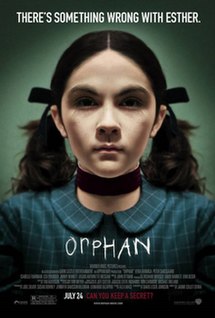
Orphan is another great thriller movie; it is an American psychological thriller. Where a couple who had just recently lost a child decided to adopt an innocent 9 yr old Russian orphan who turns out to be not so innocent after all.


Sub Genres of a thriller and Examples?


Sub-genres give you a better idea of what to expect from a film e.g. a thriller film could have the sub-genres of psychological thriller where in this film all conflict are more mental rather than physical.
Another example of a thriller sub-genre, Supernatural Thriller where in this sub-genre other world elements are introduced, usually as an Antagonist’s evil force. Some characters may also have physical abilities out of the ordinary compared to the protagonist and other supernatural elements may be present.


Common themes and Examples?


Movie themes are the story lines or subject that will be seen in the actual movie. There are many different themes however; common movie themes are the likes of revenge, sin, action, murder, serial killer, exorcism, jealousy and many more.


Response from the audience.


Most thriller films always gives you a chilling feeling amongst the audience and always has you on your feet.  Thrillers often leaves you wondering what’s going to happen next as they are all so unpredictable. Thriller films often have adrenaline pumping through your body from the tension that builds up within a scene using a fast soundtrack. In most thriller films when tension is at a certain level the movie will generally scare the audience using low key lighting and loud/sudden noises expecting noises.


Conclusion.


The introduction has given me a better understanding of how the course will work and also Watching different thriller movie clips has helped me understand the difference between a thriller and a horror. In addition I and others will soon be creating an opening trailer of a thriller is has helped us to start thinking of how we want our thriller to turn out, how we can make it the best it can be and also how to avoid the common mistakes we may encounter.

Thursday, 13 September 2012

Research: Cinematography (Ms Begum)

What is cinematography?
Cinematography looks at Different angles of which a shot framed at and also the movement of the camera. The audience will then build up a better opinion of the character and respond in different ways.

The Different Camera shots

There are many different terms used in modern day movies these days. Panning shot for example is where the camera moves across the screen often showing what is in view, this term is often used in films or TV shows to follow where someone is walking. Panning shot allows the audience to see what kind of environment the character is in, The Video below is an example of a panning shot.

Another term used is a Tilt shot, this is when the camera moves up or down at an object being photographed or is the main centre of attention. Tilt shots are often used to create more of an dramatic feeling than a normal straight shot would. For example, if someone is giving someone else a dirty look from head to toe a tilt shot will be used in a situation as that. The use of a tilt shot can influence how the audience will interpret the character in the frame.


A Crane shot, is a dolly shot but airborne. A crane is a large, piece of heavy equipment which is useful for moving left, right, up, down, zooming in on something or zooming out diagonally. If a crane shot is of a character or the people around the character it can make them seem insignificant and meaningless to the audience for example crane shots are often used in action films where the main character is walking through a crowd of people.

The Zoom shots are often used to capture emotion in a characters face, or to get away from something by zooming out. Zoom shots can decide how the audience may feel towards something they've just witnessed. For example a long shot of a crying child wont mean anything to the audience but when zoomed in and capturing the child's facial expression then the audience may start to feel sympathy towards the child. 

The Point of view is in other words known as 1st person where it looks like its from a personal view.This will also have the audience put themselves in that particular situation or imagine that happening to them etc. Point of view thriller scenes which has a Protagonist for example about to open a door or walk around a corner will often have low-key lighting setting and fast pace music to create tension and suspense amongst the audience. 

Close Up
Close ups shows very little background and mainly concentrates on a face or a very detailed Mise-en-scene which could be a object. Close ups magnifies the object or an expression on a person. by doing this close ups takes us into the mind of the character.
Se7en

Extreme Close up
Extreme close up is used to emphasize a facial feature, emotion or movement. For example a extreme close-up of a face for instance will show the mouth or eyes with hardly any background features depending on the angle is shot is taken from. The image below is a close up of harry potter, the audience can interpret that his facial expressions are motion less as there's a figure of  another man in his glasses lenses which suggest there must be a connections between the two.
Harry Potter

Mid Shot
A mid-shot is a shot of a character from the knees/waist up, most mid shots are normally used to show some detail of action. For example the mid-shot in the image below of John Mac Lane in Die hard, the Audience can immediately signal to the audience that he has been in some sort of struggle where he has either injured or killed another character.

Long Shot
A long shot allows the audience to see a full size image of the character from head to toes. it doesn't necessary has to be a character for example, a movie could have a long shot of a moon which then the camera zooms into the moon and zooms out of a persons eye. Long shots allow the audience to see the characters full body and also in some cases the surroundings that the character is in.

Camera Angles

High Angle
Not so extreme as a bird's eye view, high angles shot are taken when the camera is elevated above the action using a crane to give the audience a general overview. High angles make the objects/characters less significant or less scary.
 Psycho
Low Angle
Low angles are useful as they increase the height of a character and gives of a sense of fast motion at times. most low angle shots can sometimes give of of a sense of confusion and superiority. The background of all low angle shots tend to be the sky or a ceiling as they all lack detail adds to the disorientating effect.
Se7en

Filming Techniques

Hand Held
The camera moves with the person as the camera is hand held. Hand held cameras are often used in budget/amateur movie clips such as a school project. The audience may not like this as the camera operation could have shaky hands and ruin a good scene.
I learned the combinations of different camera features and how with a variety of different movements can you get the most out of a shot. I also learned how the name cinematography came about from where it origins from. 

When working on my own thriller i will be using Close ups, Mid shots and low angle shots to help make my thriller trailer as dark and mysterious as possible.